
Ski & Splitboard Guide Program
About
Master backcountry ski and splitboard guiding for peak descents, bowls, trees, and glacial terrain.
The AMGA Ski Discipline is for ski and splitboard guides who want to find the best possible snow, navigate glaciated and technical terrain on skis, be ready to respond to an injured skier or crevasse fall, and have fun in the mountains with their clients. This discipline is all about learning to create unforgettable ski experiences for guests. Guides in this discipline need Professional Avalanche Training, WFR and CPR Certification.
Please note, the AMGA welcomes both skiers and splitboarders into the program. For simplicity, “ski” is used throughout this page. Please note that when “ski” is used, it is meant to include “ski and splitboard” or “skier and splitboarder.”
Program Overview
Program Details
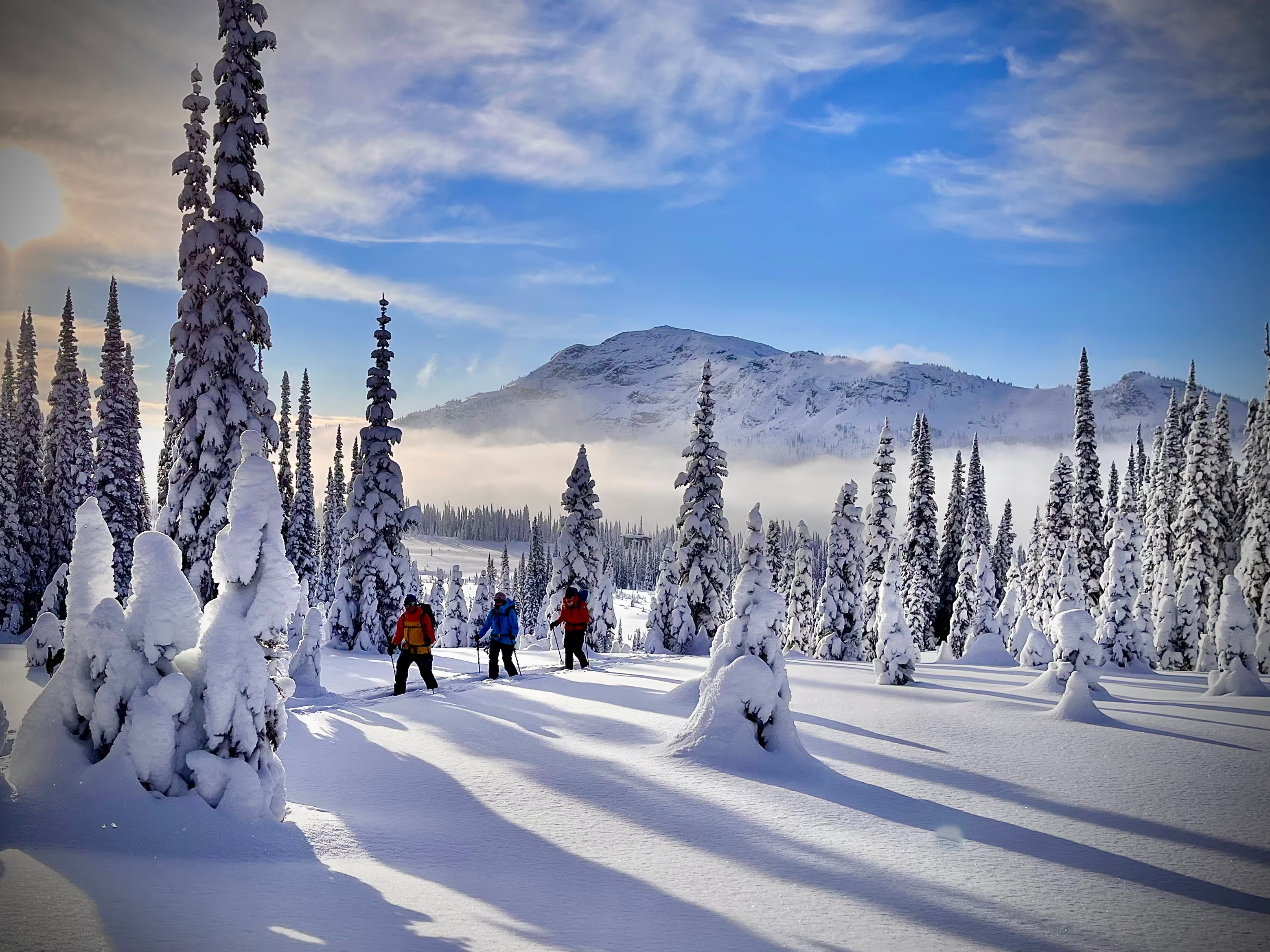
The Ski Guide Course (SGC) is the entry level program in the ski discipline. This course introduces experienced skiers to the challenging and rewarding art of ski guiding. The program focuses on track setting, down guiding, navigation, and finding the best snow. There is an emphasis placed on teaching guides how to maximize client rewards while managing risk effectively. This program takes place in non-glaciated terrain and is offered at various venues in the lower 48, as well as at SOL Mountain Lodge in BC, Canada.
Direct Entry to the Ski Guide Course (New for 2026 - 2027 Programs)
Direct Entry to the Ski Guide Course is live for Winter 2026 - 2027 Programs. Candidates do not need to complete an Alpine Skills Course (ASC) or other Mountain Guide Program course as a prerequisite to apply to the SGC. A Mountain Guide Program (SMSM, ASGM, ARM, RGC, or ASC*) will still be required as a prerequisite for the Advanced Ski Guide Course.
*completion in 2026 or prior.
- Current AMGA member
- Current CPR Certification
- Current approved Wilderness First Responder Certification (WFR)
- Pro 1 Avalanche Training Certification from an approved provider
- Minimum four years personal ski touring experience, including multi-day tours and peak ascents
- Completion of the below route requirements, submitted via resume with application:
- A. 40 Degrees or Steeper Tours
- 5 tours in terrain 40 degrees or steeper, completion within the past 5 years. A single tour may only be listed once in sections A, B and C.
- B. 4,500'+ Ascent/Descent Tours
- 5 tours that include greater than 4500' of ascent and descent per day, completion within the past 5 years. A single tour may only be listed once in sections A, B and C.
- C. Multi-Day Ski Tours
- 5 multi-day tours utilizing huts or ski-camping, completion within the past 5 years. A single tour may only be listed once in sections A, B and C.
- D. Additional Ski Tours
- A minimum of 5 additional ski tours, completion within the past 5 years (you may add up to 15 additional tours to highlight your experience, completion within the past 8 years). A minimum of 20 individual tours must be documented across the resume requirements.
- A. 40 Degrees or Steeper Tours
- Submission of a ski movement video that shows a student is at or above the Ski Guide Course movement standard is required with SGC application
All students on Mountain Guide Programs must meet AMGA Essential Eligibility Criteria.
Additional Experience & Movement Criteria for SGC
It’s critical that guides come to the ski guide course with proficient ski movement and significant personal touring experience. Movement is the guide's tool for safe travel up and down, modeling technique for clients, and setting a good pace for guests.
- Proficiency skiing black and double-black diamond terrain
- Ability to smoothly link turns in all terrain and conditions in un-groomed backcountry snow
- Ability to ascend and descend on skis an average of 4500’ - 6000’ vertical feet per day
- Ability to adjust technique to ski in diverse terrain, including sustained descents of up to 50 degrees
- Experience climbing steep snow with ice axe and crampons
- Ability to self-arrest and belay
- Ability to choose appropriate belay and rappel methods for rock and snow
- Ability to navigate in whiteout conditions
- Proficiency with multiple burial avalanche rescue (consistently able to locate 3 buried avalanche transceivers in under 10 minutes)
- Experience with winter camping and shelter construction
- Experience with basic short-roping and short-pitching on snow and rock
- Experience with map and compass
- Familiar with LNT practices
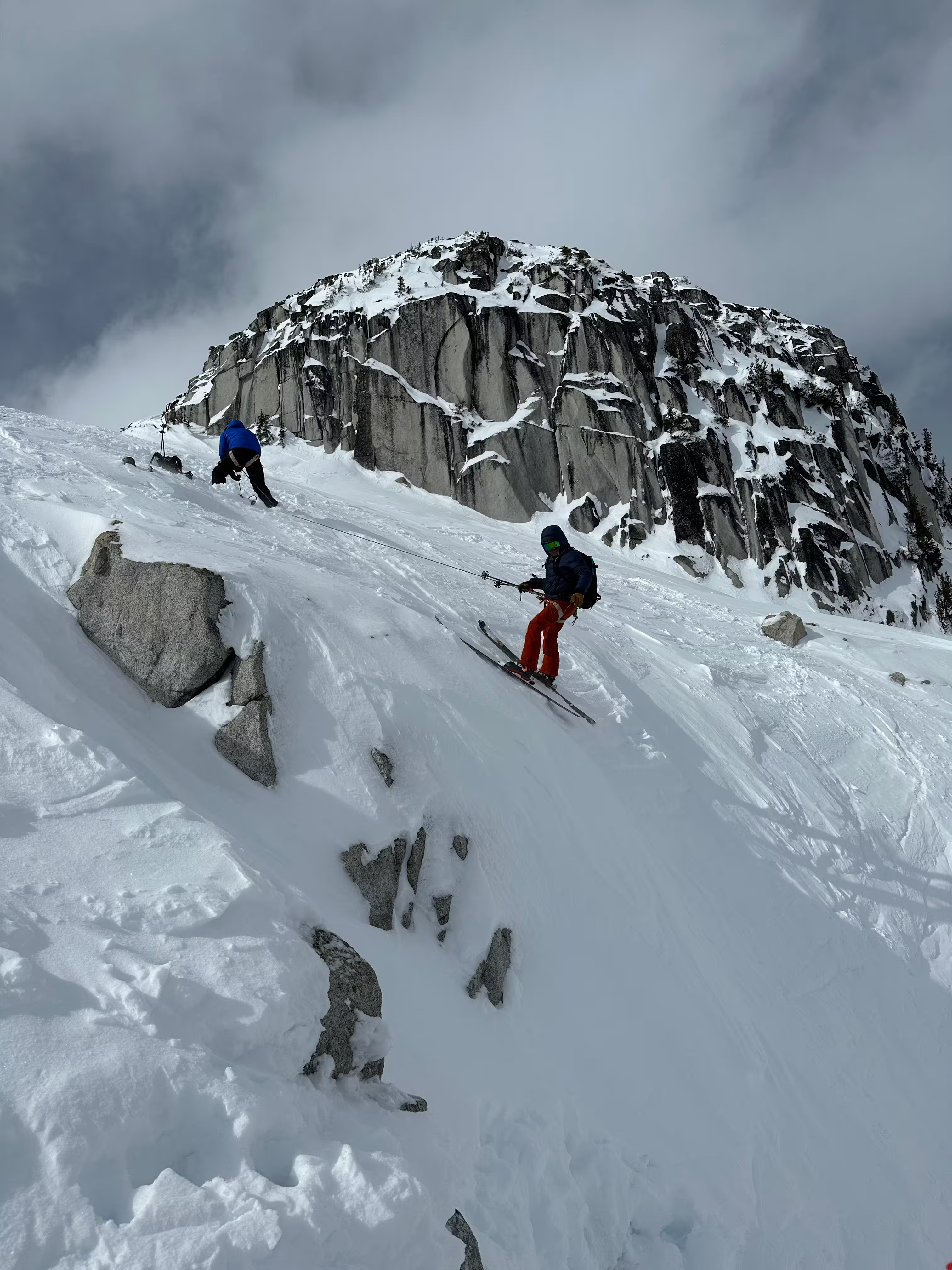
The Ski Mountaineering Skills Module (SMSM) builds on the foundational ski guiding principles developed during the SGC by introducing the technical rope systems, guiding techniques and the associated application relevant to ski guiding.Topics include snow anchors, rappelling, lowering, short-roping/pitching, glacier travel, crevasse rescue, and other essential ropecraft for the ski guide.The course emphasizes hands-on learning through structured practice of newly introduced techniques, followed by their application in representative terrain. Due to the program's short duration, conditions may not allow access to every type of terrain or snow conditions.
- Current AMGA member
- Current CPR Certification
- Current approved Wilderness First Responder Certification (WFR)
- Pro 1 Avalanche Training Certification from an approved provider
- Successful Completion of the Ski Guide Course
- Minimum four years personal ski touring experience, including multi-day tours and peak ascents
- Completion of the below route requirements, submitted via resume with application:
- A. Alpine Climbing Routes
- 5 alpine climbing routes that include a) roped travel on 4th-class rock or harder, b) roped steep snow climbing, and/or c) roped ice climbing, completed within the past 5 years. Routes cannot be repeated.
- A. Alpine Climbing Routes
All students on Mountain Guide Programs must meet AMGA Essential Eligibility Criteria.
Additional Experience & Movement Criteria for SMSM
It’s critical that guides come to the ski guide course with proficient ski movement and significant personal touring experience. Movement is the guide's tool for safe travel up and down, modeling technique for clients, and setting a good pace for guests.
- Proficiency skiing black and double-black diamond terrain
- Ability to smoothly link turns in all terrain and conditions in un-groomed backcountry snow
- Ability to ascend and descend on skis an average of 4500’ - 6000’ vertical feet per day
- Ability to adjust technique to ski in diverse terrain, including sustained descents of up to 50 degrees
- Experience climbing steep snow with ice axe and crampons
- Ability to self-arrest and belay
- Ability to choose appropriate belay and rappel methods for rock and snow
- Ability to navigate in whiteout conditions
- Proficiency with multiple burial avalanche rescue (consistently able to locate 3 buried avalanche transceivers in under 10 minutes)
- Experience with winter camping and shelter construction
- Experience with basic short-roping and short-pitching on snow and rock
- Experience with map and compass
- Familiar with LNT practices
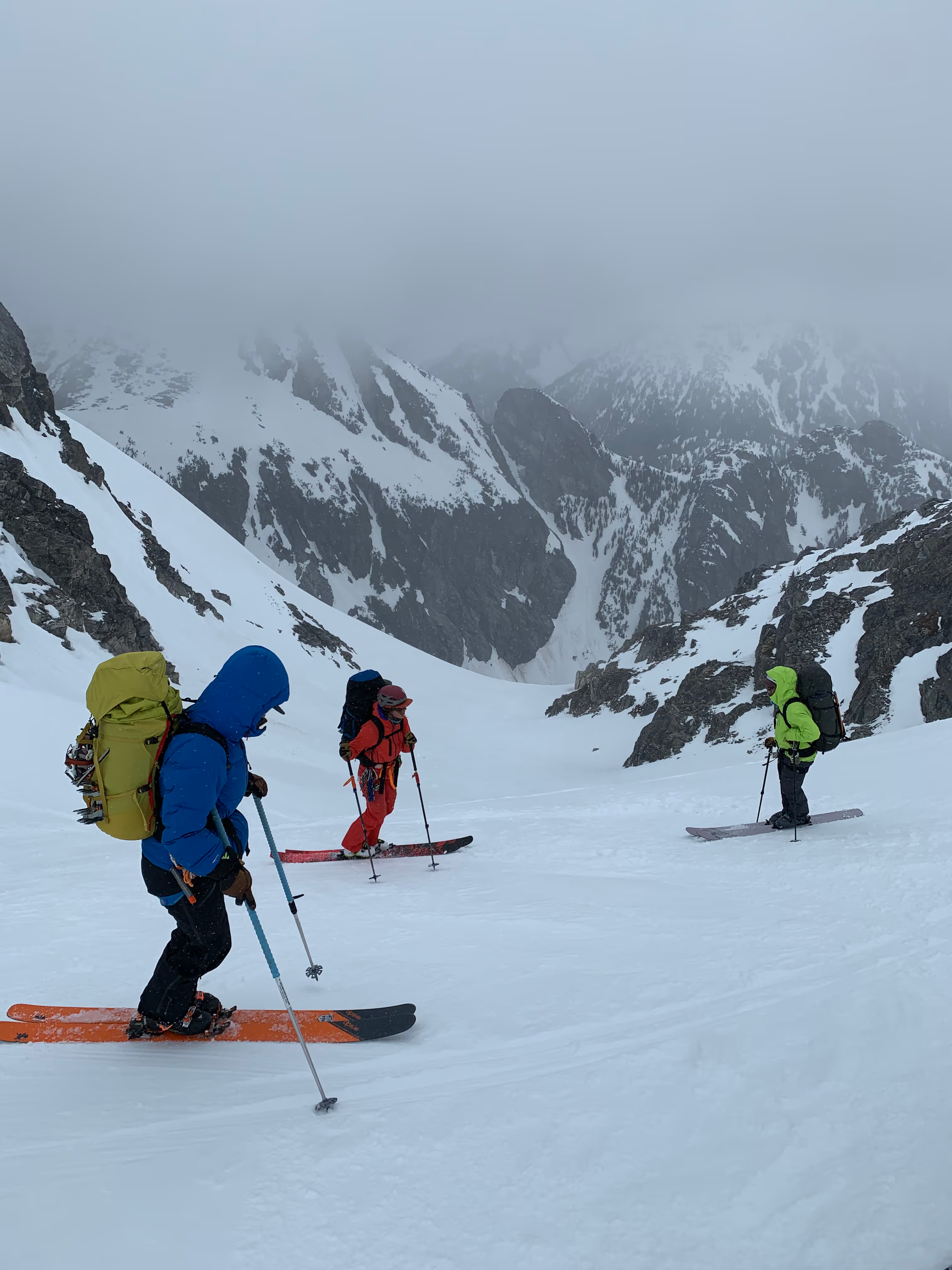
The Advanced Ski Guide Course & Assistant Exam (ASGC/AE) is designed for skilled skiers and riders who wish to learn the skills and techniques used while guiding in complex glaciated terrain. This course covers management of 3rd, 4th, and possibly intermittent 5th class terrain, technical descents, management of multiple clients, and small team rescues. It emphasizes effective risk management while maximizing client rewards.
Format
The ASGC/AE includes instruction, coaching, debriefing, and assessment. The assessment phase is known as the Assistant Exam. The focus of the course is on principle-based learning, giving you the strategies for problem solving through coaching and practical application in simulated guide/client scenarios. Guiding and instructional skills will be assessed during the Assistant Exam portion(s) of the course. A final assessment will be based on your overall performance.
Assistant Exam
The Assistant Exam is intended to help determine whether or not your skills meet the minimum standards appropriate for guiding in ski mountaineering terrain. In addition, it serves as preparation for the final certification exam. Upon passing the Assistant Exam, a guide will gain a scope of practice to work unsupervised in non-glaciated terrain—including terrain that requires rope work—and under supervision in glaciated terrain.
Assessment Areas
- Screening of skiing/riding movement as well as movement skills in alpine, snow, and mixed terrain
- Technical skills assessment:
- Transceiver search
- Sled lower
- Guided days assessment, which includes evaluation in the following six areas: risk management, client care, technical systems, terrain assessment, movement skills, and professionalism.
- Current AMGA Member
- Current CPR Certification
- Current approved Wilderness First Responder Certification (WFR)
- Pro 1 Avalanche Training Certification from an approved provider
- Successful completion of the Ski Guide Course
- Successful completion of an AMGA SMSM, ASC (completed 2026 or prior), ASGM, ARM, or RGC
- Completion of the below route requirements, submitted via resume with application:
- A. Complex Tours
- 5 tours in complex terrain that include 5,000' or more of ascent and descent per day, completion since passing the SGC and within the past 5 years. A single tour may only be listed once in sections A, B and C.
- B. Glaciated Tours
- 5 tours in complex glaciated terrain, completion since passing the SGC and within the past 5 years. A single tour may only be listed once in sections A, B and C.
- C. Guided Tours
- 10 guided or mock-guided tours in complex terrain, completion since passing the SGC and within the past 5 years. A single tour may only be listed once in sections A, B and C.
- D. Alpine Routes
- 5 alpine climbing routes that include a) roped travel on 4th class rock or harder, b) roped steep snow climbing, and/or c) roped ice climbing, completion within the past 5 years. A single route may only be listed once in section D.
- A. Complex Tours
Additional Experience and Movement Criteria for ASGC
- Confidence skiing/riding black and double-black diamond terrain, at the time of the course
- Ability to smoothly link turns in all terrain and conditions in un-groomed backcountry snow
- Ability to ascend and descend on skis an average of 6000 vertical feet per day
- Familiar with LNT practices
- Experience with glacier travel and crevasse rescue
- Ability to navigate in whiteout conditions
- Competence with map and compass
- Mastery of avalanche assessment skills and transceiver use
- Competence with sled rescue skills
- Competence with winter camping and shelter construction
- Competence with basic short roping and pitching on snow and rock
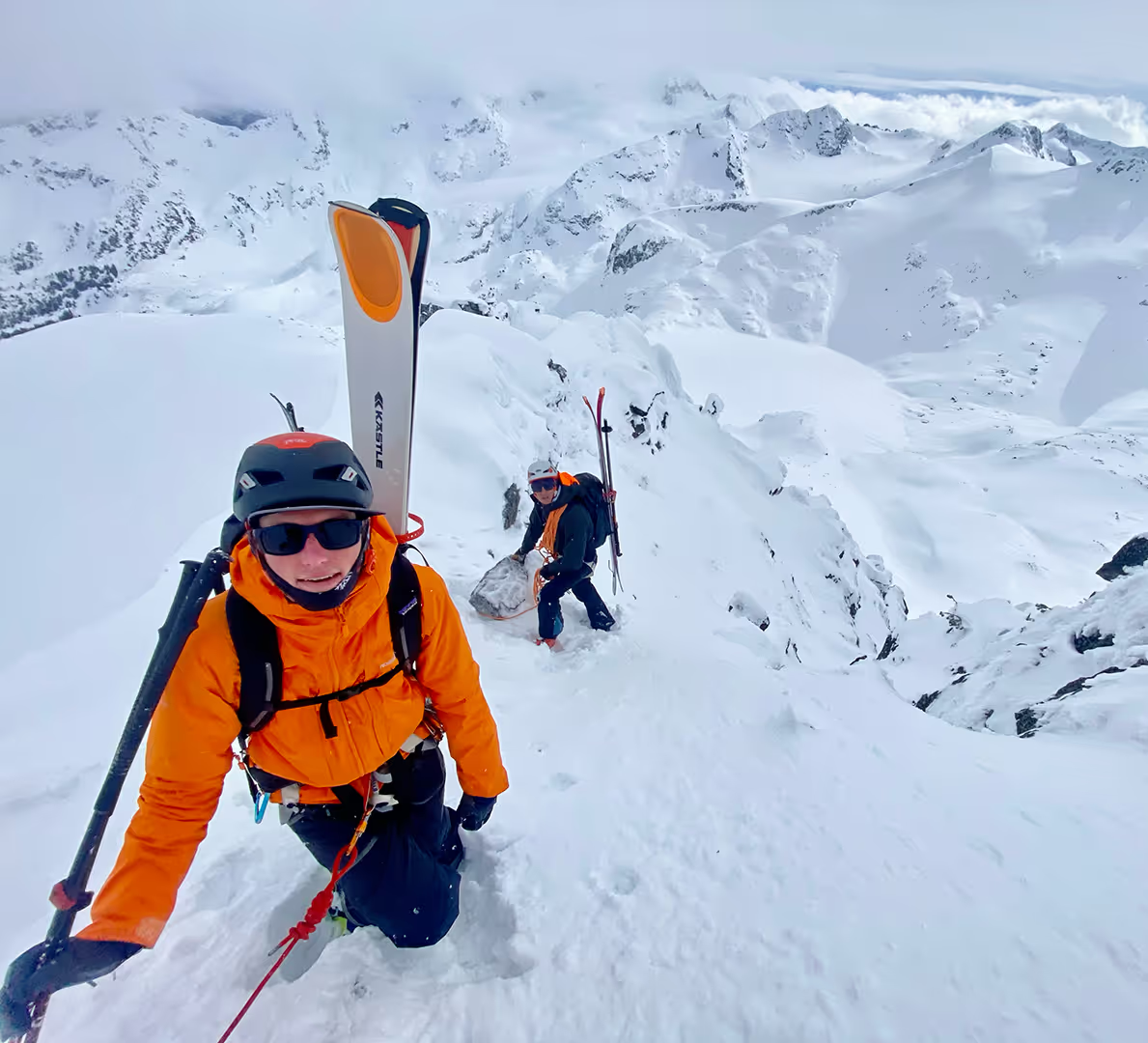
The goals of the 8-day Ski Guide Exam (SGE) are to assess and certify ski guides at the AMGA and IFMGA international standard and to further the general education of the students.
Expectations
The exam is conducted on ski mountaineering routes chosen by the examiners. Ski mountaineering terrain includes glaciated alpine environments where guides may need to employ extensive short roping techniques, use of the ice axe and crampons, as well as travel on heavily crevassed glaciers. Multi-pitch ice or rock climbing is generally not included except when necessary to achieve a specific objective.
During the exam students are expected to carry out guiding assignments given by the examiners. The students serve as guides to the examiners and to the other participants on routes chosen for their complex guiding challenges. While acting as the guide, students are responsible for route planning, client orientation, risk management, and normal guiding practices. Route assignments and client profiles are usually given the night before. Students are responsible for obtaining information about the assigned route as well as alternative routes if the original objective proves infeasible.
- (Updated 2023) Students may take the Ski Guide Exam in the same venue as their Advanced Ski Guide Course/AE but are encouraged to complete the SGE in a different snowpack.
Assessment Areas
- Screening of movement skills in rock, alpine, snow, ice, and mixed terrain
- Crevasse Rescue Drill
- Guided days assessment, which includes evaluation in the following six areas: risk management, client care, technical systems, terrain assessment, movement skills, and professionalism
- Current AMGA member
- Current CPR Certification
- Current approved Wilderness First Responder Certification (WFR)
- Pro 2 Avalanche Training Certification from an approved provider https://www.americanavalancheinstitute.com/
- AAI, AIARE, or SAS Pro 2https://www.avalancheassociation.ca/
- CAA Level II
- Successful completion of the Advanced Ski Guide Course and Assistant Exam
- Completion of the below route requirements, submitted via resume with application:
- A. Glaciated Tours:
- 5 tours in complex glaciated terrain, completion since passing the ASGC and within the past 5 years. A single tour may only be listed once in sections A, B and C.
- B. 45 Degrees or Steeper Tours:
- 5 ski tours on terrain 45 degrees or steeper, completion since passing the ASGC/AE and within the past 5 years. A single tour may only be listed once in sections A, B and C.
- C. Guided Tours:
- 10 guided tours (5 of the tours may be mock guided), completion since passing the ASGC/AE and within the past 5 years. A single tour may only be listed once in sections A, B and C.
- A. Glaciated Tours:
Additional Experience and Movement Criteria for SGE
- Confidence skiing black and double-black diamond terrain, at the time of the exam
- Ability to smoothly link turns in all terrain and conditions in un-groomed backcountry snow
- Familiar with LNT practices
- Mastery of glacier travel and crevasse rescue techniques
- Mastery of all elements of navigation, including the ability to route find on complex glaciated terrain
- Mastery of whiteout navigation, including the use of current technologies and map and compass
Program Schedule
Application Process
Rock Programs
(Dec. 1, 2026 - May 1, 2027)
Rock Programs
(May 1, 2027 - Aug. 31, 2027)
(Sept. 1, 2027 - Nov. 30, 2027)
Alpine Rock Modules
(October 2027)
Multi-Pitch Instructor Program
Learn to guide and teach on shorter, technical multi-pitch rock climbing routes.
%20(1).avif)