Alpine Guide Program
.avif)
About
The AMGA Alpine Guide Discipline is designed for those who guide alpine snow, ice, and rock routes on glaciated and non-glaciated peaks. It covers rock climbing, glacier climbing, peak ascents, waterfall ice climbs, and expeditionary climbing, with no limitation on season or elevation. The alpine program progression will help you refine your skills to provide highly rewarding alpine climbing experiences in diverse alpine terrain.
Program Overview
Program Details
The Alpine Snow & Glacier Module (ASGM) is designed to equip competent snow and glacier climbers with the essential skills needed to professionally guide clients on glaciated and snow-covered alpine terrain. This module focuses on the techniques necessary for snow and glacier environments, with minimal emphasis on scrambling or 5th-class rock. As part of the Alpine Guide discipline, the ASGM and the Alpine Rock Module (ARM) can be completed to achieve the Apprentice Alpine Guide credential.
.avif)
- Current AMGA member
- Current CPR Certification
- Current approved Wilderness First Responder Certification (WFR)
- Completion of Recreation Level 1 Avalanche Training & Avalanche Rescue Course (AAI, AIARE, SAS, or AAA)
- Completion of the below *route requirements, submitted via resume with application:
- A. Snow & Glacier Climbs - Grade III or Longer
- 20 snow/glacier climbs, (10 must be grade III or longer), lead or shared lead (if shared lead, must have led 50% or more of route), 5 or more of these climbs involve overnight camping in an environment with seasonal snow and/ or winter snow conditions, completion within the past 5 years. A single route may only be listed once in section A.
- B. Snow & Glacier Climbs - 40 degrees or steeper
- 5 snow/glacier climbs 40 degrees or steeper, lead or shared lead (if shared lead, must have led 50% or more of route), within the past 5 years. Routes from section A may be used in section B. A single route may only be listed once in section B.
- C. Ice Climbs
- 5 alpine/water ice leads that are AI/WI 3 or harder, single- or multi-pitch (if multi-pitch, must have led at least the AI/WI3), completion within the past 2 years. Routes from section A may be used in section C. A single route may only be listed once in section C.
- D. Mixed Climbs
- 5 M3 or harder leads, climbed in mixed conditions w/ boots and crampons, single- or multi-pitch (if multi-pitch, must have led at least the M3), completion within the past 2 years. Routes from section A may be used in section D. A single route may only be listed once in section D.
- A. Snow & Glacier Climbs - Grade III or Longer
*Any route listed (with a free climbing rating) needs to have been completed using hands, feet and body movements only (or tools and crampons if applicable), and climbed anchor to anchor without weighting the rope or protection equipment (“free climbed”).
All students on Mountain Guide Programs must meet AMGA Essential Eligibility Criteria.
The Alpine Rock Module (ARM) prepares competent alpine rock climbers to guide non-glaciated, rock-dominant alpine routes in an alpine environment. As part of the AMGA Alpine Guide progression, the ARM and the Alpine Snow and Glacier Module (ASGM) can be completed to achieve the AMGA Apprentice Alpine Guide credential. The ARM emphasizes hands-on practice, coaching, and feedback to develop essential alpine rock guiding skills.
.avif)
- Current AMGA member
- Current CPR Certification
- Current approved Wilderness First Responder Certification (WFR)
- Completion of Recreation Level 1 Avalanche Training & Avalanche Rescue Course (AAI, AIARE, SAS, or AAA)
- Successful completion of the Alpine Snow and Glacier Module
- Completion of the below *route requirements, submitted via resume with application:
- A. Alpine Rock Routes - Grade III or longer
- 10 multi-pitch alpine rock routes, grade III or longer, lead or shared lead (if shared lead, must have led 50% or more of route), within the past 5 years. A single route may only be listed once in section A.
- B. 5.8 Traditional Single Pitch Rock Climbs
- 5 traditional rock leads, 5.8 or harder, single-pitch, within the past 2 years. A single route may only be listed once in section B.
- C. Multi-Pitch Climbs (does not need to be alpine in nature)
- 10 traditional multi-pitch rock climbs, lead or shared lead (if shared lead, must have led 50% or more of route), within the past 5 years. Routes from sections A and B cannot be listed in Section C. A single route may only be listed once in section C.
- A. Alpine Rock Routes - Grade III or longer
*Any route listed (with a free climbing rating) needs to have been completed using hands, feet and body movements only (or tools and crampons if applicable), and climbed anchor to anchor without weighting the rope or protection equipment (“free climbed”).
All students on Mountain Guide Programs must meet AMGA Essential Eligibility Criteria.
The Alpine Guide Course (AGC) is designed to take a competent alpine climber and develop the fundamental skills they need to guide in diverse alpine environments. It provides training for aspiring guides and experienced guides who work in a wide range of alpine environments including alpine rock, snow and glacier, mixed terrain, alpine ice, and waterfall ice. The AGC emphasizes a hands-on approach to the mechanics of guiding on alpine terrain. As part of the Alpine Guide discipline, the AGC can be completed after completing the Rock Guide Course to achieve the Apprentice Alpine Guide credential.
.avif)
- Current AMGA member
- Current CPR Certification
- Current approved Wilderness First Responder Certification (WFR)
- Completion of Recreation Level 1 Avalanche Training & Avalanche Rescue Course (AAI, AIARE, SAS, or AAA)
- Successful completion of the Rock Guide Course
- Completion of the below *route requirements, submitted via resume with application:
- A. Alpine Rock Routes - Grade III or longer
- 5 alpine rock routes, grade III or longer, lead or shared lead (if shared lead, must have led 50% or more of route), completion within the past 5 years. A single route may only be listed once throughout the resume.
- B. Alpine Rock Routes - 5.8 or harder
- 5 multi-pitch alpine rock routes, 5.8 or harder, lead or shared lead (if shared lead, must have led at least the 5.8), completion within the past 5 years. A single route may only be listed once throughout the resume.
- C. Snow & Glacier Climbs - Grade III or longer
- 5 snow/glacier climbs, grade III or longer, 2 of which include overnights, lead or shared lead (if shared lead, must have led 50% or more of route), completion within the past 5 years. A single route may only be listed once throughout the resume.
- D. Snow & Glacier Climbs - 40 degrees or steeper
- 5 snow/glacier climbs 40 degrees or steeper, lead or shared lead (if shared lead, must have led 50% or more of route), within the past 5 years. A single route may only be listed once throughout the resume.
- E. Ice Climbs
- 5 alpine/water ice leads that are AI/WI 3 or harder, single- or multi-pitch (if multi-pitch, must have led at least the AI/WI 3), completion within the past 2 years. A single route may only be listed once throughout the resume.
- F. Mixed Climbs
- 5 M3 or harder leads, climbed in mixed conditions w/ boots and crampons, single- or multi-pitch (if multi-pitch, must have led at least the M3), within the past 2 years. A single route may only be listed once throughout the resume.
- A. Alpine Rock Routes - Grade III or longer
*Any route listed (with a free climbing rating) needs to have been completed using hands, feet and body movements only (or tools and crampons if applicable), and climbed anchor to anchor without weighting the rope or protection equipment (“free climbed”).
All students on Mountain Guide Programs must meet AMGA Essential Eligibility Criteria.
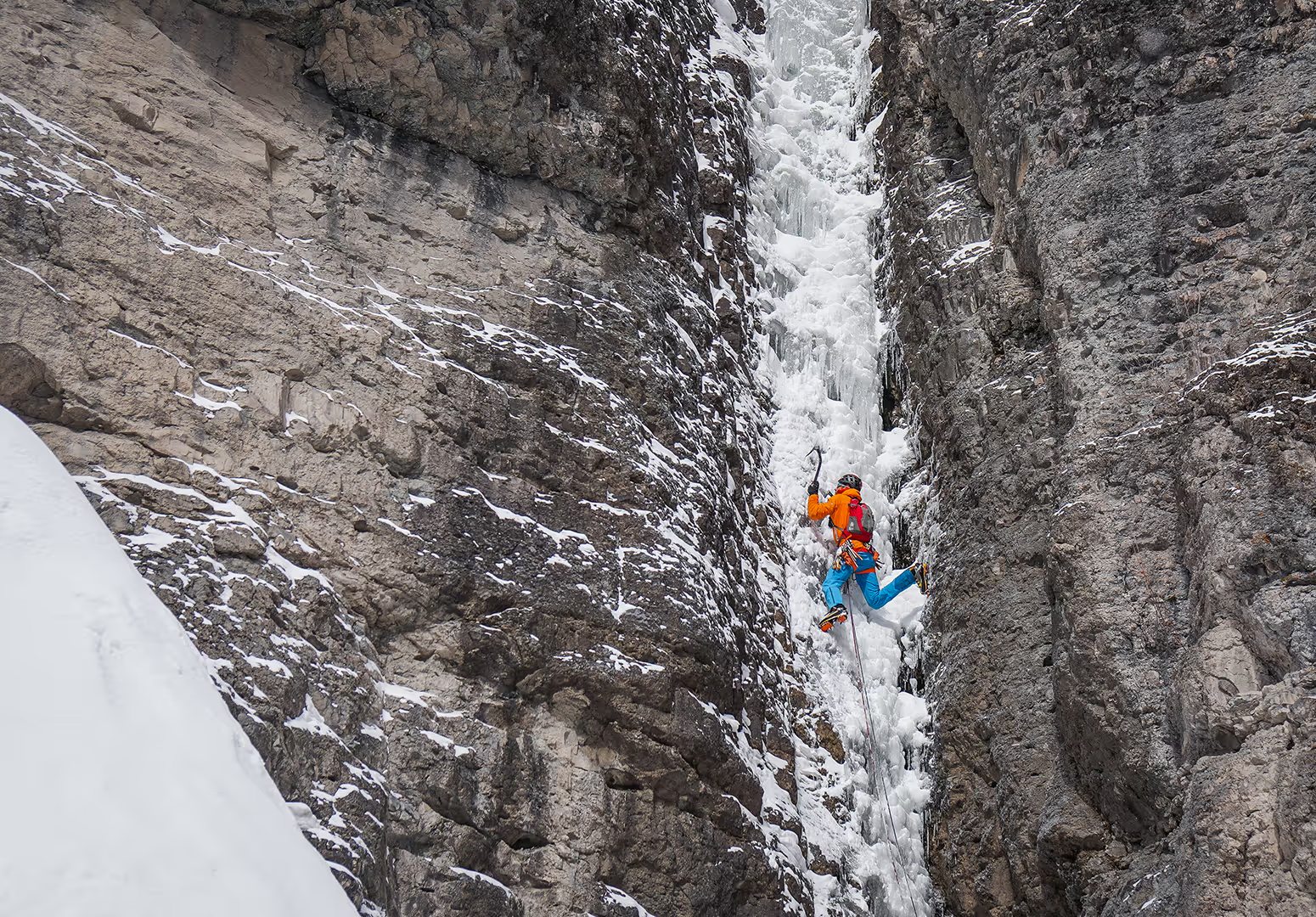
The Ice Instructor Course (IIC) is a fundamental component of the education and certification process for alpine guides and is designed for skilled rock and ice climbers. This course addresses the skills and techniques used while instructing and guiding in single and multi-pitch ice terrain. The course is also a pathway for guides who intend to take the Ice Instructor Exam and become specialists in ice guiding.
The IIC includes indoor and outdoor classroom time, practice sessions with coaching and feedback, and climbing on a variety of water ice climbs. Climbing routes are from one to five pitches in length and up to WI 4+ in difficulty. As the course progresses, student will have the opportunity to apply guiding skills while leading single and multi-pitch ice routes.
It is important for students to come to the course with well-established skills in leading ice climbs, including placing protection and building strong anchors. Recreational ice climbing skills and judgment will be screened throughout the daily activities.
- Current AMGA member
- Current CPR Certification
- Current approved Wilderness First Responder Certification (WFR)
- Completion of Recreation Level 1 Avalanche Training & Avalanche Rescue Course (AAI, AIARE, SAS, or AAA)
- Successful completion of the Rock Guide Course OR both the Alpine Rock Module & the Alpine Snow and Glacier Modules
- AMGA strongly recommends that IIC students are both Apprentice Alpine & Apprentice Rock Guides prior to enrolling in this program
- Completion of the below *route requirements, submitted via resume with application:
- A. WI4 Leads
- 10 ice leads rated WI4 or harder, single- or multi-pitch (if multi-pitch, must have led at least the WI4), completion within the past 3 years recommended. A single route may only be listed once in section A.
- B. Additional Ice Leads WI3
- 20 ice leads rated WI3 or harder (10 must be multi-pitch, if shared lead—must have led 50% or more of route), within the past 5 years recommended. A single route may only be listed once in section B. Routes from section A may be used in section B.
- A. WI4 Leads
*Any route listed (with a free climbing rating) needs to have been completed using hands, feet and body movements only (or tools and crampons if applicable), and climbed anchor to anchor without weighting the rope or protection equipment (“free climbed”).
All students on Mountain Guide Programs must meet AMGA Essential Eligibility Criteria.
Additional Experience & Movement Criteria for IIC
- Minimum three years of ice climbing experience
- Confidence leading WI 4 at the time of the course
- Competence in placing ice protection, building ice threads, & placing traditional rock protection
- Proficiency with basic knots, including but not limited to: rewoven figure 8, figure 8 and overhand bight knots, bowline, clove hitch, munter hitch, munter mule hitch, flat overhand, double fisherman's, and autoblock, prusik and klemheist friction hitches
- Proficiency with multiple types of belay devices, including assisted braking devices (ABDs)
- Proficiency with a variety of rappel devices on multi-pitch rappels
- Familiarity with Leave No Trace practices
- You should be capable of leading the climbs listed on your submitted resume and arrive physically, mentally, and emotionally prepared for multiple consecutive days of ice climbing and instruction over the entirety of the course
- Students should be experienced with early starts and long days that are demanding
- Familiar with LNT Practices
The AAGC/AE includes instruction, coaching, debriefing, and assessment to develop alpine guiding skills for challenging and complex alpine terrain. The focus of the course is on principle-based learning, giving you strategies for problem solving through coaching and practical application in simulated guide/client scenarios. Guiding and instructional skills will be assessed during the Assistant Exam portion(s) of the course. A final assessment will be based on your overall performance.
Assessment Areas
- Screening of movement skills in rock and alpine terrain;
- Technical skills assessment including 45-minute alpine rock rescue drill
- Guided days assessment, which includes evaluation in the following 6 areas: risk management, client care, technical systems, terrain assessment, movement skills, and professionalism.
- Current AMGA member
- Current CPR Certification
- Current approved Wilderness First Responder Certification (WFR)
- Pro 1 Avalanche Training Certification from an approved provider
- Successful completion of the Alpine Guide Course, or Alpine Rock Module + Alpine Snow and Glacier Module
- Successful completion of the Ice Instructor Course
- Completion of the below *route requirements, submitted via resume with application:
- A. Glacier Climbs
- 10 alpine climbs in challenging glaciated terrain, lead or shared lead (if shared lead, must have led 50% or more of the route), completion since passing the AGC (or ASGM + ARM), within the past 5 years. A single route may only be listed once in sections A, B, and C.
- B. Grade IV Alpine Routes
- 5 alpine climbs grade IV or longer, lead or shared lead (if shared lead, must have led 50% or more of the route), completion since passing the AGC (or ASGM + ARM), within the past 5 years. A single route may only be listed once in sections A, B, and C.
- C. Guided Routes
- 10 guided or mock-guided routes in diverse alpine terrain, completion since passing the AGC (or ASGM + ARM), within the past 5 years. A single route may only be listed once in sections A, B, and C.
- D. Ice Climbs
- 5 alpine/water ice routes that are AI/WI 4 or harder, single- or multi-pitch (if multi-pitch, must have led at least the AI/WI 4), completion within the past 2 years. A single route may only be listed once in section D.
- E. 5.10a Rock Climbs
- 5 rock leads rated 5.10a or harder, on various rock types, sport or trad, single- or multi-pitch (if multi-pitch must have led at least the 5.10a), completion since passing the AGC (or ASGM + ARM), within the past 5 years. A single route may only be listed once in E.
- F. Climbs Using Mountain Boots
- 5 rock leads rated 5.8 or harder, climbed in mountain boots, sport or trad, single- or multi-pitch (if multi-pitch must have led at least the 5.8), completion since passing the AGC (or ASGM + ARM), within the past 5 years. A single route may only be listed once in section F.
- A. Glacier Climbs
*Any route listed (with a free climbing rating) needs to have been completed using hands, feet and body movements only (or tools and crampons if applicable), and climbed anchor to anchor without weighting the rope or protection equipment (“free climbed”).
Additional Experience and Movement Criteria for AAGC
- Confidence leading 5.10a in rock shoes and 5.7 in mountain boots, at the time of the course
- Confidence leading WI 4, at the time of the course
- Confidence with French Technique on firm 40 degree snow, at the time of the course
- Familiar with short roping, short pitching, lowering, rappelling, and the associated transitions
- Familiar guiding multiple clients, including managing two clients simultaneously on two ropes
- Comfortable leading in complex glaciated terrain
- Familiar with LNT practices
The goals of the 9-day Alpine Guide Exam (AGE) are to assess and certify alpine climbing guides at the AMGA and IFMGA international standards and to further the general education of students.
Students are expected to carry out guiding assignments given by the examiners during the exam. Students will serve as guides to the examiners and to the other participants on routes chosen for their complex guiding challenges. Students are responsible for route planning, client orientation, risk management, and normal guiding practices while acting as the guide. Route assignments and client profiles are usually given the night before. You are responsible for obtaining information about the assigned route as well as alternative routes if the original objective proves infeasible.
Assessment Areas
Evaluation of movement skills in rock, alpine, snow, ice, and mixed terrain; crevasse rescue drill; and practical guiding days with assessment in the following 6 areas: risk management, client care, technical systems, terrain assessment, movement skills and professionalism.
- Current AMGA member
- Current CPR Certification
- Current approved Wilderness First Responder Certification (WFR)
- Pro 2 Avalanche Training Certification from an approved provider
- Successful completion of the Advanced Alpine Guide Course and Assistant Exam
- Completion of the below *route requirements, submitted via resume with application:
- A. Alpine Routes
- 10 alpine climbs (5 must be grade IV or longer), lead or shared lead (if shared lead, must have led 50% or more of the route), completion since passing the AAGC, within the past 5 years. A single route may only be listed once in sections A & B.
- B. Guided Routes
- 10 guided alpine routes (5 may be mock guided, 5 must be in challenging glaciated terrain), completion since passing the AAGC, within the past 5 years. A single route may only be listed once in sections A & B.
- C. 5.10a Rock Climbs
- 5 rock leads rated 5.10a or harder, on various rock types, sport or trad, single- or multi-pitch (if multi-pitch must have led at least the 5.10a), completion since passing the AAGC, within the past 5 years. A single route may only be listed once in section C.
- D. Climbs Using Mountain Boots
- 5 rock leads rated 5.8 or harder, climbed in mountain boots, sport or trad, single- or multi-pitch (if multi-pitch must have led at least the 5.8), completion since passing the AAGC, within the past 5 years. A single route may only be listed once in section D.
- A. Alpine Routes
*Any route listed (with a free climbing rating) needs to have been completed using hands, feet and body movements only (or tools and crampons if applicable), and climbed anchor to anchor without weighting the rope or protection equipment (“free climbed”).
Additional Experience and Movement Criteria for AGE
- Confidence leading 5.10a in rock shoes, at the time of the exam
- Confidence leading 5.7 in mountain boots, at the time of the exam
- Confidence leading WI 4, at the time of the exam
- Confidence with French Technique on firm 40 degree snow, at the time of the exam
- Familiar with LNT practices
Program Schedule
Application Process
Rock Programs
(Dec. 1, 2026 - May 1, 2027)
Rock Programs
(May 1, 2027 - Aug. 31, 2027)
(Sept. 1, 2027 - Nov. 30, 2027)
Alpine Rock Modules
(October 2027)
Rock Guide Program
Train to guide multi-pitch rock climbs with advanced techniques for safety and efficiency.